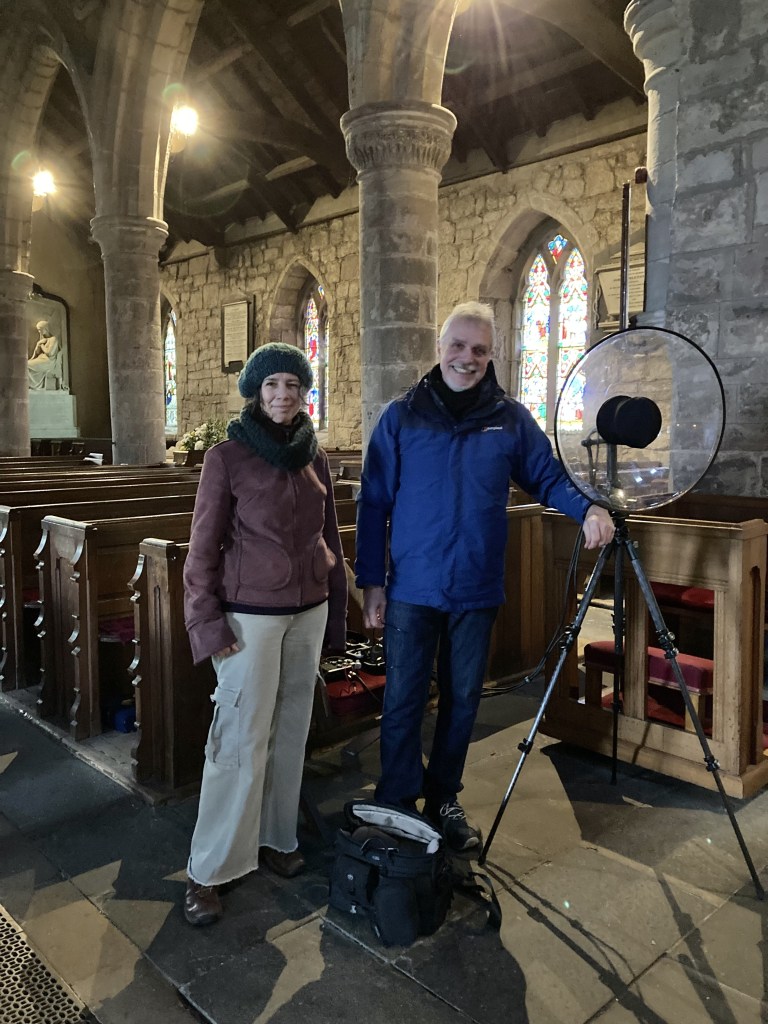
I was honoured to meet composer, John Casken and sculptor, Keith Roberts through Helen Mason, a social archivist, who curated their installation and performance at St. Aidan’s, in Bamburgh, Northumberland. I was invited to record a soundscape, to ‘capture’ people arriving to the venue, attending the performance and then departing. The ambience of the church, hushed whispers and conversations that followed the performance were all recorded along with the performance of ‘Memorial’ that lasted for 12 spell bound minutes.
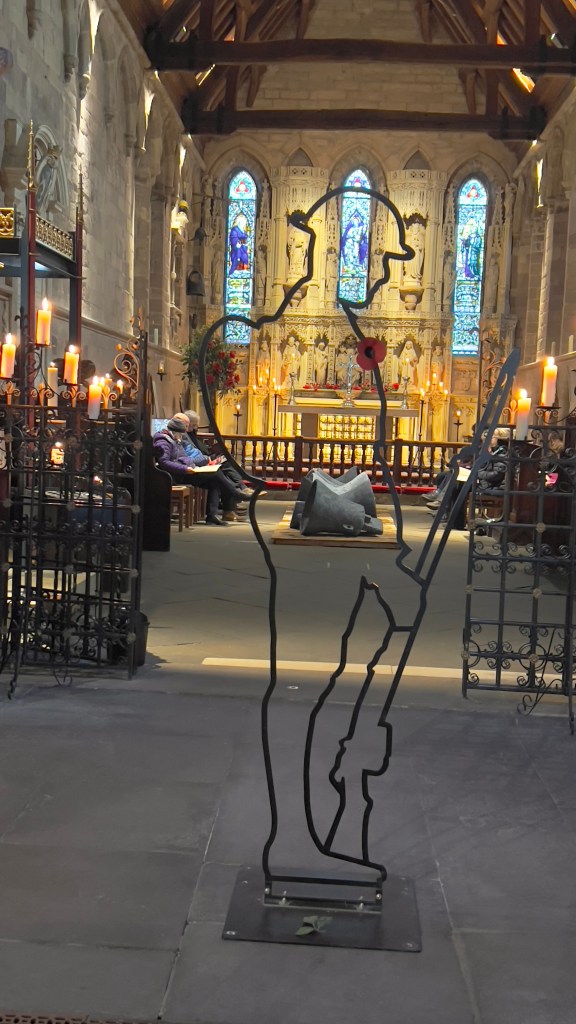
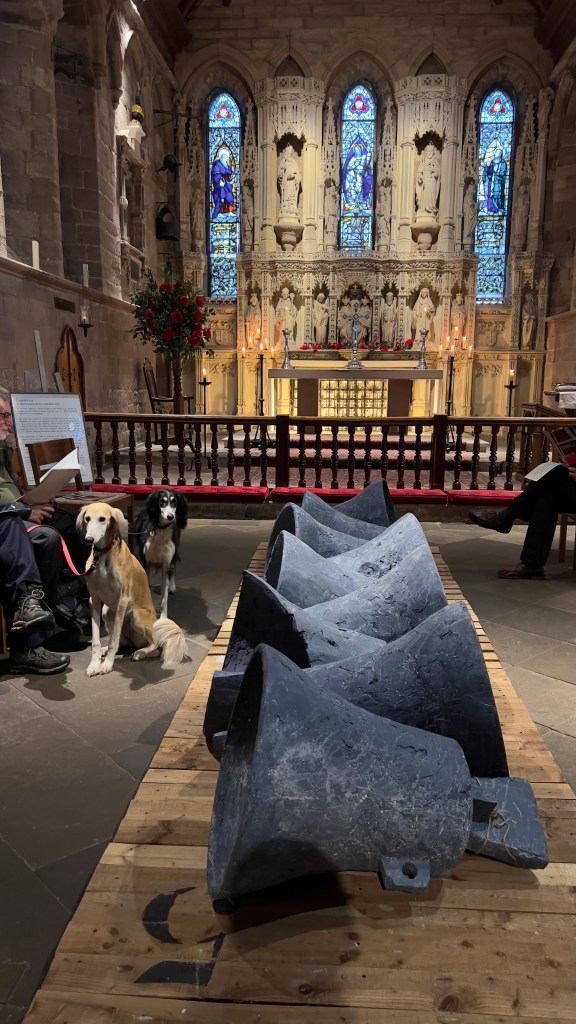
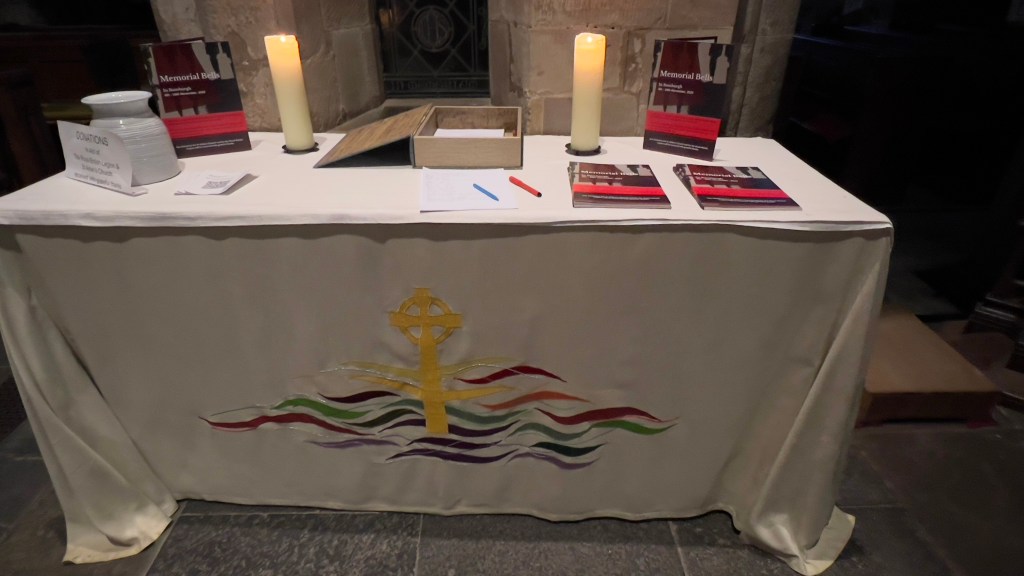
The sculpted artwork of bells by Keith Roberts entitled Caporetto were on display alongside a recording of Memorial by John Casken, a choral work he wrote for Coquetdale Chamber Choir in 2014. Caporetto refers to a battle fought on the Italian front during the Autumn of 1917, and Memorial is a work about twelve men from Upper Coquetdale who were lost during the First World War and who lie with no graves. Their names, ages and villages where they lived form part of John Casken’s own text for the music, his memorial for the fallen and lost.
Keith Roberts’ broken and fractured bells represent the chaos and destruction of war. Noticeably, the bells have no tongues; they are silenced and have no voices. These are not bells that will ring out in ceremony, but nine fragile and damaged plaster bells which nevertheless speak to us, reminding us of loss and at the same time asking us to consider what it is to be silenced and how we might emerge from this.
The names of the lost soldiers in John Casken’s Memorial are sung as a timeless roll-call, men lost, their identities emerging from silence and not forgotten. The work is for soprano and baritone soloists, choir and percussion and the recording, by The Cosmo Singers (University of Manchester Chamber Choir) was conducted by Robert Guy.
 Graham Hembrough, Photographer & Soundscape Artist